
AI SEO Content Generator: How to Evaluate Quality Before You Publish
November 23, 2026

An AI-generated article can have clean headings, plausible claims, and a target keyword in all the expected places, then still fail to answer the searcher’s real question. Publishing that draft creates a thin page that consumes crawl attention and can weaken trust with readers.
An AI SEO content generator earns its place in your workflow when every draft passes a consistent editorial review. Rankdesk can help teams research, draft, and prepare content at scale, while the final quality decision should rest on evidence from search results, source material, and your brand’s expertise.
Quick answer: how to evaluate AI SEO content before publishing
Use this five-step review before approving a draft:
- Confirm the page solves the dominant search intent shown in the current results.
- Verify every factual claim, date, process, and product statement against a reliable source.
- Add original experience, examples, decisions, and details that competing pages lack.
- Check the title, headings, links, entities, metadata, and structured data against the page goal.
- Edit for brand voice, commercial accuracy, and a clear next action, then approve or return the draft for revision.
How to check search intent in AI SEO content
Start in the live search results before reading the draft closely. Search engines reveal the expected format through the pages they rank: a how-to guide, comparison, category page, tool, local result, or product page. Review the first page manually and record what a reader receives from the top results.
For example, imagine a B2B SaaS company plans an article at /blog/employee-onboarding-checklist. Its AI SEO content generator produces a 2,000-word guide about onboarding software, including a long section on platform features. The results page mainly ranks downloadable checklists, templates, and short implementation steps. The draft needs a usable checklist near the top, plus guidance for adapting it. The software discussion belongs later, where it supports the task.
Assess intent with four questions:
- What outcome does the searcher expect within the first few paragraphs?
- Which content format dominates the current results?
- Which audience and stage of awareness do the ranking pages serve?
- What specific subquestions recur across the results?
Treat the search results as a brief, then compare each draft section with that brief. Remove sections that broaden the topic without helping the reader complete the task. Add missing steps where top-ranking pages consistently satisfy a need.
Google explains that its systems prioritize helpful, reliable, people-first content in its guidance on creating helpful content. A strong intent match gives the page a clear purpose for readers and search engines.
How to fact-check content from an AI SEO content generator
Fact-checking needs a claim-level pass. Read the draft with a document open beside it and highlight anything a reader could act on: dates, prices, product capabilities, legal requirements, medical guidance, benchmarks, tool instructions, and quoted language.
Return to the onboarding-checklist example. The first draft says that “every new employee should complete security training on day one.” That may be a sound internal preference, yet it reads as a universal requirement. Rewrite it as a recommendation tied to the company’s own process, or cite the applicable policy where a regulatory requirement exists.
Use the source closest to the claim. Official documentation supports software behavior. Government or regulator pages support rules. A first-party product page supports your own features. Keep a source log for sensitive articles so an editor can retrace the review later.
Factual review also covers freshness. Check publication dates, interface labels, and screenshots. An article about a platform feature can become inaccurate after a product update even when every sentence was correct at drafting time.
Google’s Search Quality Rater Guidelines provide a useful editorial standard: pages handling consequential topics require especially strong care around accuracy, expertise, and trust.
How to make AI-generated SEO content original
Originality comes from information your business can genuinely contribute. Generic paragraphs can explain a concept, yet they rarely give readers a reason to cite, share, or return to your page.
For the onboarding guide, the team could add a six-step sample sequence from its own operating practice: send equipment confirmation five business days before the start date; assign a peer contact; give access to the knowledge base; schedule a 30-day manager check-in; collect open questions; revise the checklist quarterly. Those details turn broad advice into a practical artifact.
Build this layer after accuracy review. Ask a subject-matter expert for decisions, constraints, terminology, screenshots, common mistakes, and exceptions. Capture the answer in a short interview rather than asking for a full rewrite. Then place those details where a reader needs them.
This is also where competitor research helps. Compare the draft against the leading pages to find topics they omit or explain poorly. Our guide to using an AI content writer with competitor research shows how to identify content gaps without copying the structure or wording of another site.
AI SEO content generator on-page optimization checks
On-page optimization should make the content easier to understand and retrieve. Review the page as a connected asset, including its URL, metadata, headings, internal links, media, and markup.
| Element | Review question | Practical approval standard |
|---|---|---|
| Title tag | Does it describe the promised outcome and page topic? | Specific, readable, and aligned with the search intent |
| H1 and headings | Can a reader scan the solution in order? | One H1, descriptive H2s, and logical substeps |
| URL | Does the slug reflect the page’s durable topic? | Short, stable, and free of filler words |
| Internal links | Do links take readers to the next useful resource? | Links support related tasks and commercial paths |
| Entities and terminology | Are names, products, and concepts consistently labeled? | Terms match authoritative sources and site language |
| Structured data | Does markup match visible content? | Valid markup supports the page type without exaggeration |
For the sample article, link from the checklist to a deeper implementation guide and to the relevant product page only where each link helps the next decision. Avoid placing a product link after every subsection. Readers need room to work through the advice.
Validate structured data after publishing changes. Google’s structured data documentation explains that markup should represent the page accurately and follow the requirements for its type.
Check for duplicate intent across your own site, too. A new article can compete with an existing guide when both promise the same outcome for the same query. Consolidate overlapping pages or give each a distinct audience, format, and purpose.
How to review brand fit before publishing AI content
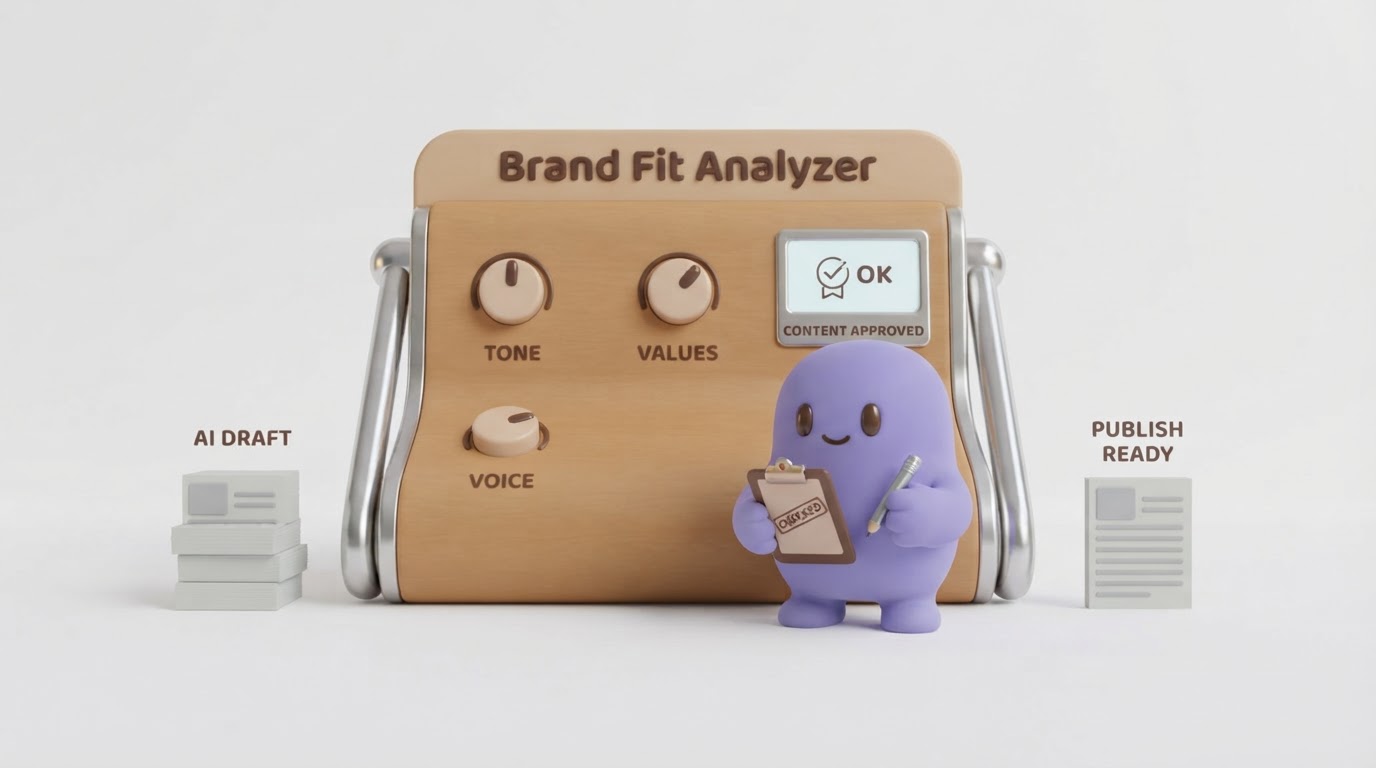
Brand fit protects commercial credibility. A technically accurate article can still feel wrong when it makes claims your sales team would qualify, uses terms customers never use, or gives advice that conflicts with your service model.
Give the final reviewer a compact brand brief: approved product descriptions, audience segments, claims that require legal review, preferred vocabulary, prohibited promises, and examples of the company’s level of technical depth. Apply it line by line to introductions, calls to action, examples, and comparison language.
In the onboarding example, a company selling enterprise software may serve HR operations teams with complex approvals. A casual “set up your onboarding in an afternoon” claim creates the wrong expectation. Replace it with a scope-aware description of what the article helps readers organize and where implementation planning begins.
Brand review should also check the author’s point of view. Add a named expert review where subject expertise is central. Use a clear byline and update date. Readers and AI assistants have stronger material to assess when the page identifies its source, explains its scope, and supports its claims. For a wider approach to earning AI citations, see How to Get Mentioned by ChatGPT.
Using Rankdesk to keep the AI SEO content review workflow consistent
A spreadsheet-based review process works for a few articles. It becomes difficult to maintain when a team manages topic research, briefs, drafts, revisions, and publishing across many pages. Rankdesk gives that workflow a defined sequence.
Start by setting the topic and target site context. The platform can research your site, competitors, and keywords to inform an article or landing-page draft. Review the resulting brief against the live search results before drafting, especially when the topic has a mixed intent.
Next, use the draft as the editorial starting point. Insert first-party examples, product constraints, and source-backed claims. For the onboarding article, this is where the HR operations sequence, internal terminology, and approved product language enter the page.
Then run the five checks from this guide before approval: intent, accuracy, originality, on-page elements, and brand fit. Route articles needing expert input back for revision. Publish approved work through your chosen process, including review-first publishing or automatic publishing where the team has established reliable guardrails.
See how Rankdesk works for the workflow, and review its integrations when you are planning the publishing path. Teams using WordPress can also apply the same review model described in this guide to AI content publishing with editorial control.
A practical use case: review sales content before it enters prospecting workflows
The same editorial standard applies when content will support outbound sales. Consider a B2B software company publishing a guide on buyer intent signals for operations leaders. A vague, unsupported article can give sales teams weak material to share and leave prospects with unanswered questions.
Review the guide for intent first. A buyer searching for intent signals likely wants definitions, sources of signals, practical qualification steps, and limits on interpretation. Verify every claim about data quality, account activity, or enrichment. Then add an original scenario: a representative sees repeat visits to a pricing page, confirms company fit, and prepares a relevant follow-up rather than sending a generic sequence.
Teams building this kind of content can pair the editorial workflow with an AI sales engagement platform for prospecting and research when they need to connect researched accounts, buyer signals, and outreach preparation. That use case makes the article more useful when it includes a clear handoff: content educates the prospect, sales research adds account context, and the representative chooses the next conversation based on verified information.
Keep the language cautious around buyer intent. A signal can guide research and prioritization; it needs human judgment before a sales claim or outreach decision. This approach produces content that supports sales activity while preserving trust with the reader.
Common failures when evaluating AI-generated SEO content
The most expensive errors often appear during rushed approval rather than drafting. Watch for these patterns:
- A broad article targets a query where readers expect a template, tool, or direct answer.
- Citations support a nearby point rather than the exact statement they follow.
- Examples sound realistic but contain no actual operational detail from the business.
- Keyword placement creates repetitive headings or awkward opening sentences.
- Automation publishes drafts before a reviewer checks claims and brand language.
- A new page duplicates an existing article’s search intent.
Set a revision threshold. If a draft fails intent or factual review, return it for structural work instead of polishing sentences. Surface-level editing cannot repair the wrong content shape.
FAQ
How accurate is an AI SEO content generator?
Accuracy varies by topic, source availability, prompt context, and how recently the information changed. Treat every generated factual statement as a draft claim until a qualified reviewer verifies it against a reliable source.
Can AI-generated content rank in Google?
AI-assisted content can rank when it serves readers well, offers useful information, and meets Google’s quality expectations. Publish pages only after they pass the same editorial standards applied to human-written work.
How long should an AI content review take?
The review time depends on subject risk and page complexity. A straightforward, well-scoped article may need a focused editorial pass, while legal, financial, medical, technical, or product-comparison pages require source validation and expert input.
Should you publish AI content automatically?
Automatic publishing fits repeatable, low-risk content programs with established briefs, templates, source rules, and sample audits. Use an approval queue for new topic areas, high-stakes claims, and pages that represent key commercial promises.
What makes content useful for AI assistant citations?
Clear answers, attributable claims, consistent entity information, descriptive headings, and first-party expertise make a page easier to assess and cite. Build pages around a specific question, then support the answer with concrete evidence and transparent sourcing.
If you want a consistent way to review, plan, write, and publish search-focused content, see how Rankdesk works. It researches your site, competitors, and keywords, then creates articles and landing pages you can review or publish automatically.